
Dog-Friendly 14ers: Which Peaks Allow Dogs
Quandary, Grays, Bierstadt and Blue Sky allow dogs; Longs and Culebra do not. Leash orders, talus, goats and turnaround rules.
Twenty-two guides on altitude, heat, snakes, storms, snow, boots, boarding and where to stay, written for the specific ways Colorado is hard on dogs.
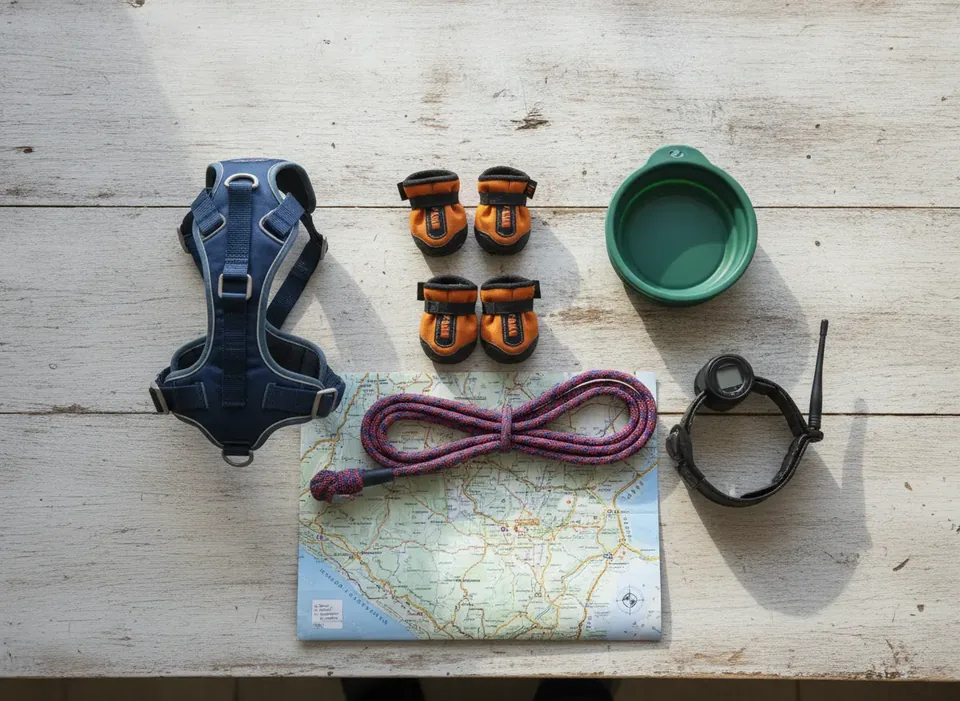
Most of what goes wrong for dogs on Colorado trails comes down to six things, and all six are predictable. None of this is veterinary advice; if your dog is in trouble, the answer is always a vet.
Altitude. Denver sits at 5,280 feet, Evergreen at 7,162, Breckenridge at 9,728, and the popular 14er trails climb above 11,000. The Forest Service says plainly that none of the 14ers are easy because of elevation. A dog that lives at sea level tires faster, drinks more and recovers slower. Give it a day or two of short walks such as the Sapphire Point loop before anything long, carry extra water, and turn around if the dog slows, stumbles or will not eat. Persistent coughing, weakness or collapse means a vet.
Heat and pavement. Denver's July average high is 91°F. Sandstone, concrete and south-facing grass hold heat well past noon, and Larimer County tells visitors not to bring pets to Devil's Backbone in hot weather at all. Walk early, test the ground with your hand, and know that many foothills trails have no water. Heavy panting that does not settle in shade, drooling, vomiting or wobbling are reasons to stop and get to a vet.
Foxtails and cheatgrass. Grass awns dry out in early summer on Front Range grasslands and work their way into paws, ears, eyes and noses. Check the dog after every walk through tall grass; a sudden sneezing fit, head shaking, limping or a swelling between the toes is a vet visit, not a wait-and-see.
Rattlesnakes. They are on every Front Range foothills trail from April to October, sunning on rocks at Mount Sanitas, in the grass on Green Mountain and along the canyon floor at Castlewood. A short leash and staying on trail are the practical defenses; aversion training is an option. Any bite is an emergency.
Afternoon storms. Summer lightning arrives early above treeline. The Forest Service pages for Quandary and Grays push early starts, and local practice is to be heading down by noon. Dogs do not understand thunder on a ridge; plan so you are never there for it.
Snow and de-icer. CDOT's main liquid de-icer is magnesium chloride, and the ASPCA notes that chloride de-icers irritate the gut if licked off paws. Wipe feet after road walks, consider boots on north-facing switchbacks that hold ice into spring, and remember that Evergreen gets about 80 inches of snow a year and Evergreen Lake does not allow dogs on the ice.
Moose at Lily Pad Lake, mountain goats on Quandary, elk in rut at Elk Meadow every September and October, and bears on Boulder's fall leash-only trails round out the list. Each guide below goes deeper on one of these, or on the gear and services that make the trip easier.
Grouped by what you are planning.
Quandary, Grays, Bierstadt and Blue Sky allow dogs; Longs and Culebra do not. Leash orders, talus, goats and turnaround rules.
Cherry Creek and Chatfield's pass-only areas, Boulder's Voice & Sight trails and the city dog parks, plus the leash-only places people assume are open.
CPW's six feet, Jeffco's ten, Denver's $80 ticket, Forest Service wilderness orders and Summit County's immediate-control standard, in one table.
South- and east-facing mesa tops and canyon floors that dry out by midday, and which north-facing switchbacks to skip.
The handful of Colorado taprooms with a fenced yard or dog parklet, what the health rules allow, and how to behave so they stay open to dogs.
Mountain cabins that take dogs, with pet fees, size limits and how to find out whether the hot tub deck is fenced.
What to do with a dog outside Rocky Mountain National Park: Lily Mountain, Lion Gulch, the Lake Estes Trail and where to stay.
Town leash rules, the free gondola, Carter Park, Quandary shuttle logistics and the four places in town where dogs are banned.
How to read a pet policy before you book, what fees are typical, and town-by-town notes on where rentals cluster near trails.
The six-foot rule, which parks restrict dogs to certain trails, and the two with off-leash areas.
Forest Service and BLM dispersed sites: where voice control is legal, wildlife and weather cautions, and how to leave no trace with a dog.
Front Range campgrounds within an hour or two of the city that take dogs, with the leash rule and water for each.
Typical nightly ranges, what is included, holiday surcharges and the questions to ask before you book.
Rabies, DHPP, Bordetella and the ones that vary by facility, with timing so you are not turned away at drop-off.
Credentials, methods, questions to ask and red flags, written for owners whose dogs lose it on busy Front Range trails.
Talus, hot sandstone, mag chloride and ice: when boots help, how they should fit, and how to get a dog used to them.
What changes above 8,000 feet, the signs to watch for, how to acclimatize, and when to turn around and see a vet.
Grass awns that work into paws, ears and noses in early summer: where they grow, how to check a dog, and when it needs a vet.
How aversion classes work, what they do and do not promise, and the trails where snakes are most likely April to October.
Satellite versus cellular tracking, battery life, where Colorado has no signal, and what a collar cannot replace.
Evaporative versus phase-change vests, when they help on a 90-degree Denver day, and the limits on an exposed mesa.
Crash-tested crates, truck-bed heat and legal notes for carrying a dog in a pickup or on a hitch platform.
One short form; independent Colorado boarders, daycares, groomers and trainers reply directly.