
Daycare is licensed as boarding
Colorado’s Pet Animal Care and Facilities Act (PACFA) has no separate daycare category. A business caring for more than three dogs at a time for compensation is licensed by the Colorado Department of Agriculture as a Boarding/Training Facility, passes a pre-license inspection and is subject to routine and complaint inspections. Licenses expire each March 1. To verify one, ask to see it or open the CDA PACFA page at ag.colorado.gov and use the Active Facility List. Our directory tags a daycare “PACFA licensed” only when we have confirmed it. PACFA rules revised in July 2025 tightened enclosure, sanitation and commingling standards and added vaccination record-keeping for dogs that mix in groups, which is why most facilities now want paperwork on file before the first visit.
The temperament test
Almost every group-play daycare runs an evaluation, interview or trial day before accepting a dog. Some are free, some are priced as a short first day. Expect staff to introduce your dog to one calm dog, then a small group, and watch for body language, resource guarding and how quickly it recovers from a correction. Ask what happens when a dog fails: a good facility will say so plainly and may suggest a smaller group or training first. Most daycares require spay or neuter after about six to twelve months, current rabies, DHPP and Bordetella, and increasingly canine influenza.
Ratios, groups and rest
PACFA sets housing, cleaning and commingling rules but does not publish a single staff-to-dog ratio, so ask the facility for its own number and how it changes through the day. Ask how groups are split (by size, age, energy) and how big the largest group gets. Ask whether dogs have a mandatory rest period and where they nap, because an eight-hour day of unbroken play produces an overtired dog, not a tired one. Webcams let you check the answer yourself; note which hours they run.
Weather, altitude and indoor space
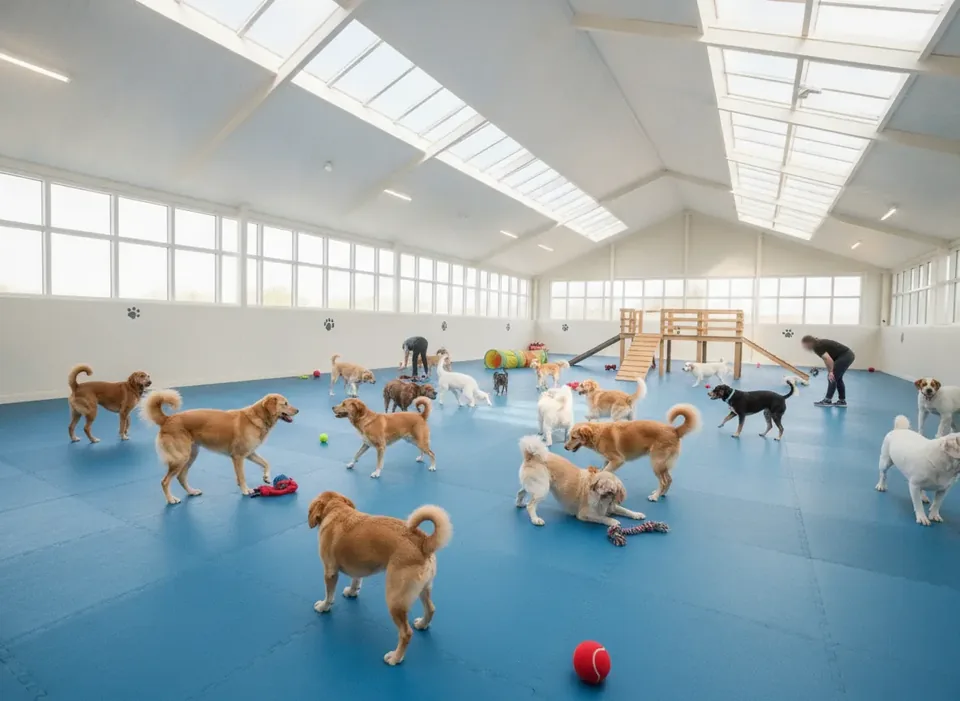
Front Range daycare runs through 95-degree July afternoons and January snow days, often in the same facility. Ask how much of the play space is indoors and climate-controlled, how shade and water are handled outside, and whether outdoor time is cut on hot or smoky days. Dogs new to altitude, flat-faced breeds and seniors tire faster; a daycare that notices and parks them in the quiet room is worth paying for. Rubber or sealed flooring, separate entries for drop-off and play areas, and a visible cleaning routine are the practical signs of a well-run room.
Packages and the fine print
Drop-in days cost the most; weekly plans and multi-day packs bring the per-day rate down. Packages are usually non-refundable and expire after six to twelve months, so buy what you will actually use. Many facilities bundle daycare into boarding at no extra charge, which makes a daycare you already trust the natural first choice for overnights later.